
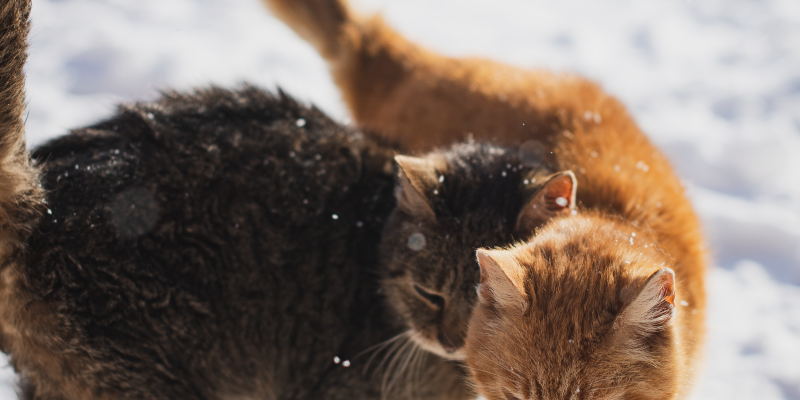
Winter can be a harsh and unforgiving season for feral and stray cats. As temperatures drop and resources become scarcer,
it’s essential to provide these vulnerable feline populations with support.
In this blog, we’ll explore ways to help feral and stray cats survive and stay warm during the winter months.
The Winter Challenges Faced by Feral and Stray Cats
Cold Temperatures: Cats are susceptible to hypothermia and frostbite when exposed to freezing temperatures for extended periods.
Limited Food Sources: In winter, hunting becomes more challenging, and food sources may dwindle, leading to hunger and malnutrition.
Shelter: Feral and stray cats often lack proper shelter from snow, rain, and wind, making them vulnerable to the elements.
How to Provide Winter Care
- Shelter: Build or provide insulated shelters for feral and stray cats. These can be simple structures made from wood, plastic bins, or repurposed materials. Line the shelters with straw or blankets for added insulation.
- Food and Water: Ensure a consistent supply of food and fresh, unfrozen water. Wet cat food can provide additional hydration and calories during the winter.
- Monitor Regularly: Check on the cats regularly to ensure their shelter is intact, and they have access to food and water.
- Heating Options: Consider using heating pads designed for outdoor use or microwavable heating discs inside the shelters for added warmth.
- Community Efforts: Engage your community in caring for feral and stray cats during winter. Encourage neighbors to provide support and share responsibilities.
- TNR Programs: Support Trap-Neuter-Return (TNR) programs to ensure feral cats are spayed/neutered and vaccinated before winter sets in, improving their overall health.
Safety Precautions
When caring for feral and stray cats during winter, it’s crucial to:
- Use outdoor-safe heating elements to avoid fire hazards.
- Ensure shelters are well-ventilated to prevent moisture buildup.
- Handle food and water bowls with care to prevent freezing.